Japan / A five-day city escape
Neon &
Noodles.
Five days adrift in a city that feels like the future remembered how to dream.
Explore the itinerary ↓Two days to explore here. Sign in for the full five.
- The pace
- 5 days / one city
- Sample budget · USD
- $2,500 - $3,500
- Best season
- March - May or October - November
The idea behind the journey
A little lost.
Very well fed.
Tokyo is a city of contrasts that somehow never contradict themselves. This five-day journey threads you through neon-soaked alleyways and hushed shrine gardens, from the controlled chaos of Shibuya Crossing to the quiet ritual of a morning fish market. You will eat extraordinarily well.
A sample plan, not a booking. Times and costs are estimates; confirm opening days, admission and reservations with venues before you go.
Day 1 / orientation
Arrival & Shinjuku After Dark
accommodation / 45 min
Check in at Hotel Gracery Shinjuku
Drop your bags at this iconic Shinjuku hotel — yes, the one with the Godzilla head on the roof. Rooms are compact but immaculate, and the location is unbeatable for exploring the west side of Tokyo.
Keep in mind Request a high floor for views of the Shinjuku skyline. The Godzilla terrace is free for guests.
Hotel Gracery Shinjuku, Kabukicho ↗ (opens in a new tab)attraction / 1.5 hours
Explore Shinjuku Gyoen National Garden
Ease into Tokyo time with a stroll through one of the city's most beautiful gardens. Three distinct styles — French formal, English landscape, and traditional Japanese — unfold across 144 acres in the heart of the city.
Keep in mind The Japanese garden section at the back is the most serene. Alcohol is not permitted inside.
Shinjuku Gyoen, Shinjuku ↗ (opens in a new tab)leisure / 45 min
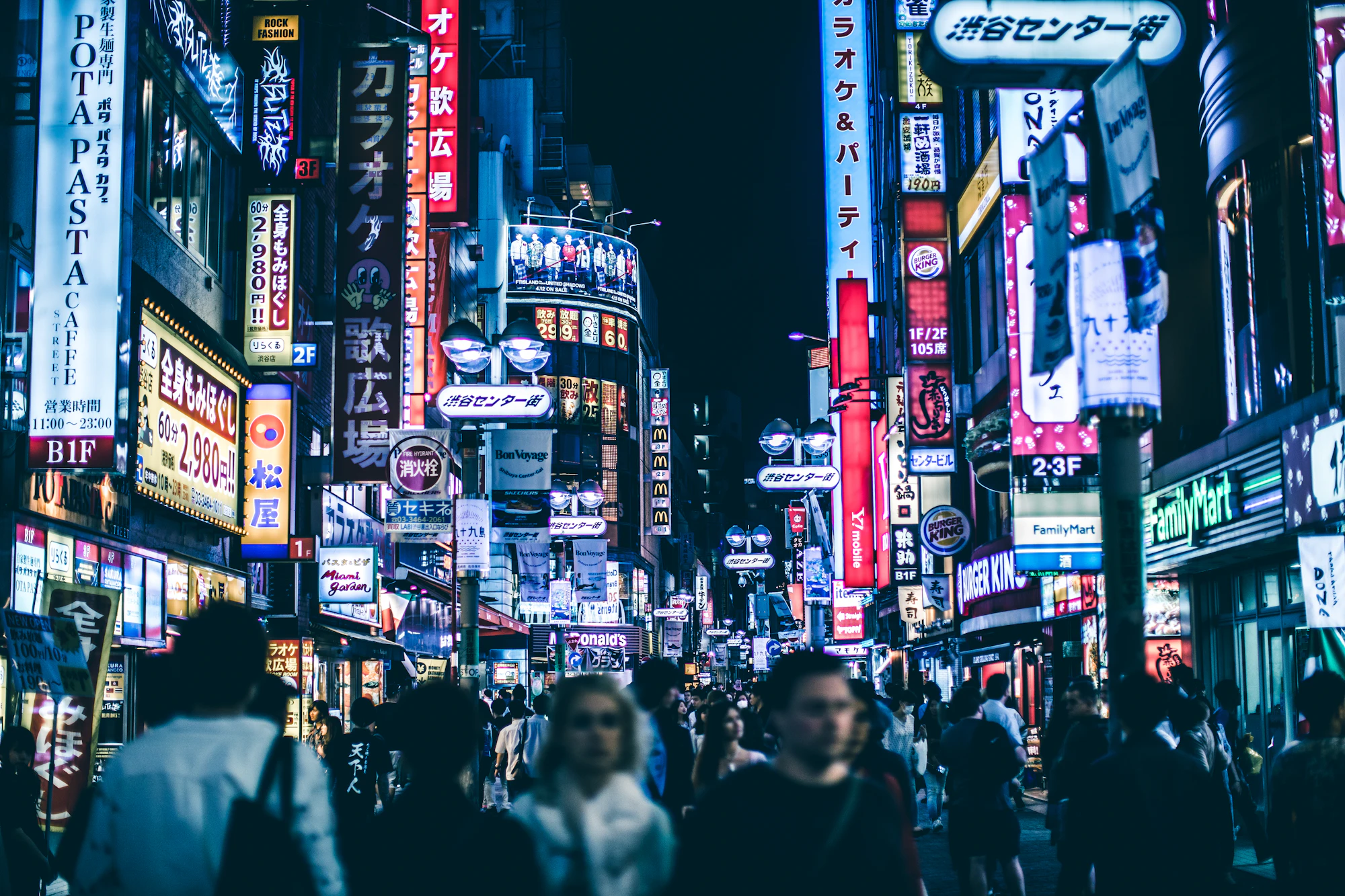
Walk through Kabukicho & Godzilla Road
As dusk falls, Kabukicho transforms into a canyon of neon. Walk down Godzilla Road and soak in the sensory overload — this is the Tokyo you imagined on the plane.
Kabukicho, Shinjuku ↗ (opens in a new tab)dining / 30 min
Dinner at Fuunji (tsukemen ramen)
This tiny standing-only shop near Shinjuku station serves some of Tokyo's best tsukemen — thick noodles dipped in a concentrated fish-pork broth. The queue moves fast. Order from the vending machine, slurp loudly, repeat.
Keep in mind Go for the large size (tokumori) — you will not regret it. Cash only.
Fuunji, Yoyogi ↗ (opens in a new tab)activity / 2.5 hours
Bar-hop through Golden Gai
Six narrow alleys, roughly 200 bars, most seating fewer than ten people. Golden Gai is Tokyo nightlife distilled to its purest form — intimate, eccentric, sometimes surreal. Some bars have cover charges; look for the ones with English menus outside.
Keep in mind Start at Bar Albatross for its three-story open interior. Avoid bars marked "regulars only." Budget 500-1000 yen cover per bar.
Shinjuku Golden Gai, Shinjuku ↗ (opens in a new tab)
At the table
Fuunji
A no-frills standing counter where the tsukemen broth is so concentrated it borders on gravy. Perpetual queue, perpetually worth it.
Tsukemen ramen / $8-15 estimateDay 2 / history & food
Old Tokyo: Markets, Temples & Tradition

.jpg)
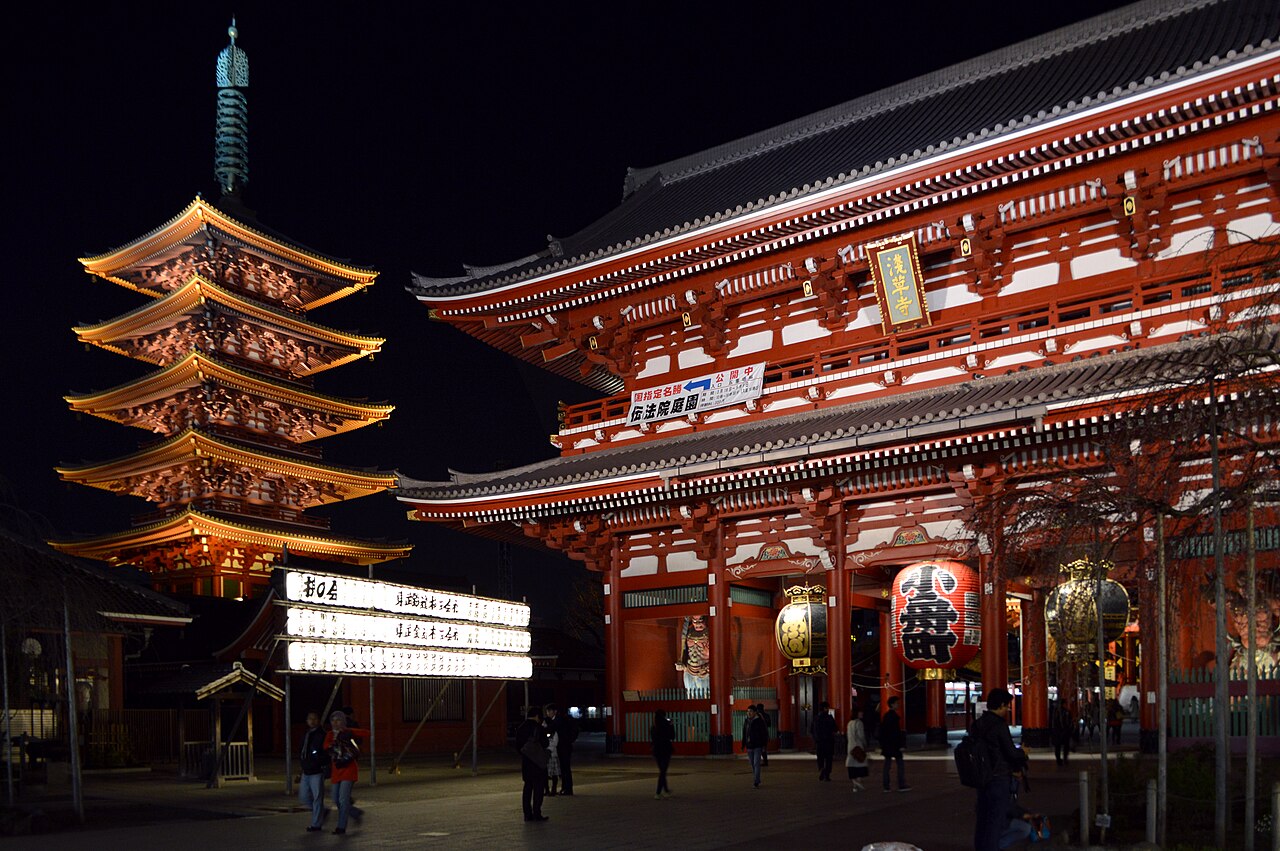
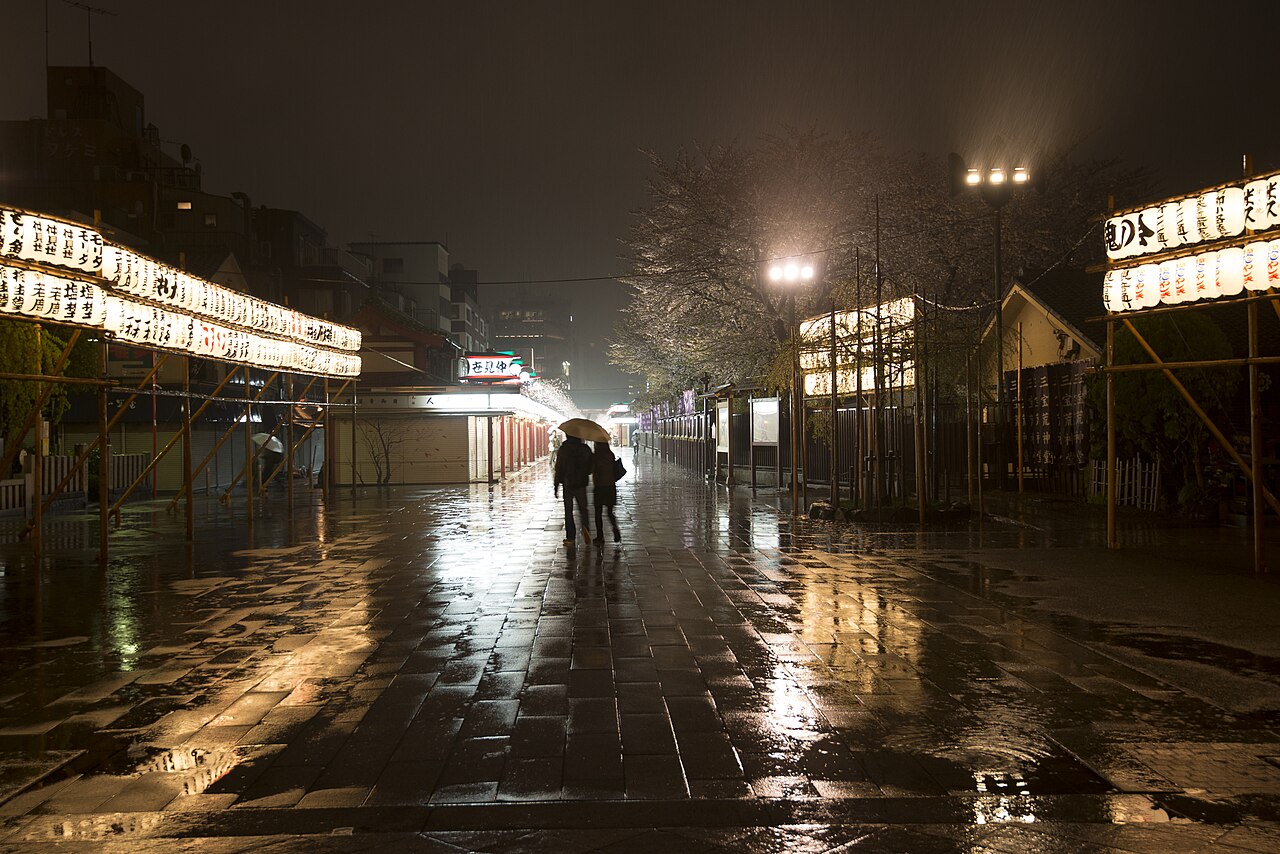
Two evening views of Asakusa. This itinerary visits the temple and shopping street in the afternoon.
dining / 1.5 hours
Sushi breakfast at Sushi Dai (Toyosu Market)
Set the alarm early. Sushi Dai inside Toyosu Market is a pilgrimage for sushi devotees — the omakase uses fish sourced from the market floor that morning. Treat the time here as a planning placeholder: queues and admission can vary, so check current arrangements before setting out.
Keep in mind The omakase chef's choice set is the move. Tell them about any allergies upfront.
Sushi Dai, Toyosu Market ↗ (opens in a new tab)attraction / 30 min
Toyosu Market observation gallery
Explore the market from its public observation gallery. This 08:30 stop does not promise a live tuna auction; check current visitor guidance before planning an auction visit.
Toyosu Market, Koto ↗ (opens in a new tab)activity / 1.5 hours
Tsukiji Outer Market street food walk
The inner market moved to Toyosu, but the outer market remains — and it is glorious. Grilled scallops, tamago on a stick, fresh uni, mochi, and matcha everything. Graze your way through the narrow lanes.
Keep in mind Try the tamagoyaki at Yamachou and the strawberry daifuku from any stall that looks busy.
Tsukiji Outer Market, Chuo ↗ (opens in a new tab)attraction / 1.5 hours
Senso-ji Temple & Nakamise-dori
Tokyo's oldest temple complex is as much about the approach as the destination. Walk the length of Nakamise-dori — lined with traditional snack shops and souvenir stalls since the Edo period — before passing through the Thunder Gate.
Keep in mind Draw an omikuji fortune slip (100 yen). If it is bad luck, tie it to the metal rack and leave it behind.
Senso-ji, Asakusa ↗ (opens in a new tab)dining / 1 hour
Lunch at Sometaro (DIY okonomiyaki)
A hidden gem in a converted old house where you cook your own okonomiyaki on the tabletop griddle. The staff will help if you look confused. The atmosphere is all warm wood and laughter.
Keep in mind Order the modan-yaki — it comes with yakisoba noodles folded inside.
Sometaro, Asakusa ↗ (opens in a new tab)activity / 2 hours
Ueno Park & Ameya-Yokocho market
Stroll through Ueno Park (home to several museums if you want to duck inside) and then down the bustling Ameyoko market street under the train tracks. It is loud, cheap, and authentically chaotic.
Ueno, Taito ↗ (opens in a new tab)dining / 1.5 hours
Dinner at Gonpachi Nishi-Azabu
The restaurant that inspired the fight scene in Kill Bill. Beyond the Hollywood connection, it serves excellent handmade soba, yakitori, and tempura across a dramatic two-story interior. A splurge-worthy dinner.
Keep in mind Reserve ahead. Sit on the upper balcony for the full cinematic effect.
Gonpachi, Nishi-Azabu ↗ (opens in a new tab)leisure / 1 hour
Evening cruise on the Sumida River
Take the water bus from Asakusa Pier toward Odaiba. The illuminated skyline reflected on the water is a quieter, more contemplative Tokyo — a perfect end to a day spent in its oldest neighborhoods.
Sumida River, Asakusa to Odaiba ↗ (opens in a new tab)
At the table
Sushi Dai
Market-fresh omakase at the source. The rice is warm, the fish was swimming hours ago, and the counter seats put you inches from the chef's knife.
Omakase sushi / $30-50 estimateThere’s more Tokyo ahead
Stay for the next chapter.
Sign in to see the remaining three days, or use this journey as the starting point for your own.
Unlock the full itinerary ↗Shibuya, Harajuku & the Art of the Crossing
8 activities · Sign in to explore
Akihabara, teamLab & Roppongi Nights
7 activities · Sign in to explore
Departure Day: One Last Bowl
5 activities · Sign in to explore
A place to land
Hotel Gracery Shinjuku
Kabukicho, Shinjuku · Mid-range
Location is everything in Tokyo, and Gracery puts you at the epicenter of Shinjuku nightlife while staying clean, comfortable, and surprisingly affordable. The Godzilla terrace is a bonus you did not know you needed.
$120 - $180 per night estimate. Confirm current rates and availability directly.
Find the hotel on Maps ↗Bring along
- Comfortable walking shoes (you will average 15,000 steps/day)
- Portable Wi-Fi or eSIM (rent at the airport)
- Light rain jacket (Tokyo weather shifts fast)
- Small towel (some restaurants only have hand dryers)
- Coin purse (many small shops and temples are cash-only)
- Reusable shopping bag (plastic bags cost extra)
Before you go
The 08:30 Toyosu stop is a gallery visit, not a promised tuna auction. The operator’s October 2026 observation-deck tour runs 05:45–06:25, with advance application and selection required. A visit at 08:30 is not that tour. Check the current calendar and visitor rules before setting out.
Official Toyosu visitor guidance ↗October 2026 auction-tour details (PDF) ↗
JNTO’s Tsukiji Outer Market guide ↗
Market route note reviewed 30 September 2026. Other venue schedules and quoted prices have not been reverified.